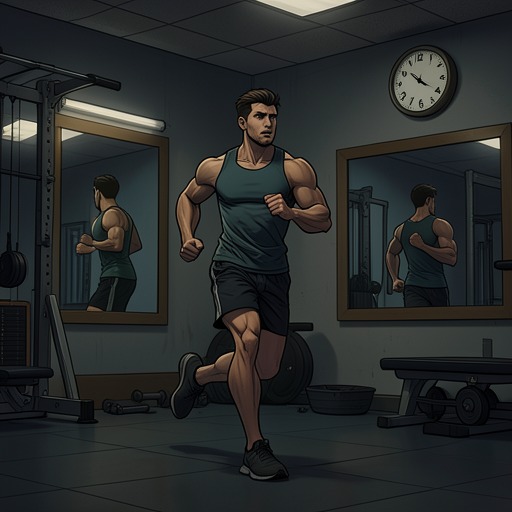
Nick Schuyler–Marquis Cooper training partnership
Not Without HopeNick Schuyler–Marquis Cooper training partnership was built on more than exercise. It joined Nick Schuyler’s identity as a fitness trainer to Marquis Cooper’s professional-athlete discipline, turning the gym into a place of competition, companionship, and shared ambition. After the 2009 Clearwater boating accident, the partnership became part of Nick’s explanation for why he survived and a source of painful contrast: the same physical culture that had brought them together could not bring Marquis back.
Formation and Athletic Context
Nick Schuyler met Marquis Cooper through training and came to regard him as both a friend and an exceptional physical standard. Marquis had played in the National Football League, while Nick had pursued football through strenuous preparation despite never establishing a college playing career. Nick understood athletic bodies through measurements, endurance, and performance, and he recognized in Marquis someone whose competitiveness could match his own. Their relationship developed quickly, although Nick later said they had known each other closely for only a few months before the accident.
The partnership also connected Marquis to Corey Smith, another National Football League player whom Nick had met at the gym. Nick described himself as being in some of the best shape of his life before training with Marquis and Corey. That context matters because the three men did not approach exercise casually: they treated conditioning as a test of strength, stamina, and will. Their bodies represented professional achievement, but also a shared language through which friendship could be made and measured.
Training Method and Mutual Competition
Nick’s own training philosophy combined intensity with a practical understanding of how bodies change. Working out relieved his stress and anxiety, cleared his mind, and gave him satisfaction when clients became stronger, lost weight, or gained confidence. Training with Marquis and Corey sharpened those motives into direct competition. Nick wanted to demonstrate that he was stronger and better conditioned in several respects, while the others pushed him to continue when the work became punishing.
The sessions could leave the men feeling as though they might vomit, yet Nick remembered them as exhilarating rather than merely painful. Their routines involved repeated sets and the impulse to add more work: they would propose another set of an exercise instead of treating the scheduled workout as a boundary. Nick’s endurance lifting was particularly important to his confidence. He had trained by keeping one body part active while another rested, sustaining ninety minutes to two hours of continuous work, and he believed this conditioning placed him on a level with Marquis and Corey in overall shape.
Training therefore carried a double meaning. It was Nick’s preferred method of managing emotion, but it was also a social contest in which the men displayed commitment to one another through effort. Nick later acknowledged that work with other clients never reproduced the same intensity or passion. He changed gyms because doing so made more sense for his career, not because he could not return, but he continued to miss the particular pressure created by Marquis and Corey.
From the Gym to the Water
The habits developed in training did not remain confined to the gym. When Marquis’s boat capsized in the Gulf of Mexico, the men’s physical conditioning became one of the resources they could draw upon, even as the sea exposed the limits of strength. Nick remembered that the group communicated and worked together after the accident, and he repeatedly urged the others to move their toes, flex their chests, shrug their shoulders, and keep their blood flowing. His instructions reflected the trainer’s instinct to convert fear into manageable bodily actions.
Will Bleakley began taking charge as darkness approached, asking about emergency equipment, flares, drinking water, and life jackets. Nick’s training partnership with Marquis thus existed inside a larger collective effort rather than a simple contest between two athletes. The men tried to obtain supplies, remain together, and keep one another from slipping away. Nick later insisted that everyone did what could be done and that no one gave up.
The connection between athletic preparation and survival remained morally complicated. Physical fitness could help Nick endure, but it could not guarantee equal outcomes among four strong, young men. Marquis and Corey had professional football experience, and Will Bleakley had been a college tight end; nevertheless, Nick was the only one rescued. The partnership’s earlier promise of shared capability became, after the capsizing, one of the reasons Nick could not stop asking why Marquis had died while he lived.
Loss, Guilt, and Lasting Bond
Nick’s memory of Marquis’s training partnership was inseparable from survivor’s guilt. He said the men had worked together and that this cooperation was part of why he was still alive. That interpretation did not make survival feel like victory. Instead, it bound Nick permanently to the dead and made the question of unequal survival recur long after the rescue.
Nick’s response was neither to claim heroic status nor to detach himself from Marquis. He rejected the idea that he had simply saved himself and emphasized that he had tried to bring the others back. The partnership supplied evidence against the rumor that the men had been fighting, drinking, or abandoning one another: their established pattern was one of shared exertion and mutual challenge, not indifference.
Marquis’s athletic identity also entered public remembrance. Three weeks after the accident, the Detroit Lions announced that no player would wear number 93 during the 2009 season, preserving the number Marquis had worn. Teammates remembered the relentlessness with which he played, extending the physical values associated with his partnership with Nick into a collective team memorial.
Memory and Continuing Significance
Nick made the partnership permanent through commemoration. He designed a tattoo with the initials of Marquis Cooper, William Ward Bleakley, and Corey Dominic Smith on the points of a Celtic cross, with a quotation about hope in the background, the date 3/1/2009 below, a rope woven through the design, and an anchor at its base. The tattoo expressed both the group’s survival struggle and Nick’s conviction that the four men had worked together until the end. He had to wait three months for the atrophied muscle in his right arm to recover enough for the tattoo.
The training partnership also survived in Nick’s later work. He returned to exercise as a way of directing stress and anger into weights, but he found that later sessions lacked the intensity he had shared with Marquis and Corey. He could continue training others, including a child whom he encouraged to slow down, endure discomfort, and never use the word “can’t,” yet the distinctive competitive passion of the earlier partnership remained unrecoverable.
Nick’s relationship with Marquis therefore ends not with a completed athletic goal but with an enduring obligation to remember. Nick created the Nick Schuyler Foundation to support causes including the Corey Smith Child Development Center, the Will Bleakley Scholarship Fund, and the Coast Guard Foundation. Although Marquis’s friendship with Nick had lasted only a short time, Nick described it as unlike other relationships in his life: it involved more work than play, but it earned his deepest respect. The gym partnership became a structure of memory, preserving Marquis not only as a football player or accident victim, but as the demanding companion whose effort helped define Nick’s body, discipline, survival, and grief.